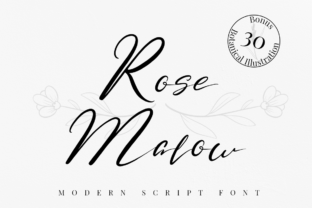
Rose Malow: A Light Handwritten Font for Authentic Branding
I opened a blank Figma file at 10 PM on a Tuesday, staring at a half-finished brand board for a small-batch skincare line. The client wanted "effortless," "organic," and "modern," but every serif felt too traditional and every sans-serif felt too corporate. That’s when I pulled up Rose Malow, a beautiful and light handwritten font with an incredibly light feel. Within minutes, the entire mood of the project shifted. It wasn’t just about picking a typeface; it was about finding a voice that matched the product’s gentle, authentic nature. If you are a brand designer looking to inject personality without clutter, this script font deserves a spot in your toolkit.
Rose Malow for Boutique Skincare Packaging Design
When testing Rose Malow on a mockup for a luxury face serum label, the difference was immediate. This Script Handwritten style offers a delicate stroke weight that reads as elegant rather than casual. In packaging design, space is premium real estate, and heavy fonts can overwhelm minimalist layouts. Rose Malow’s airy structure allows negative space to breathe, creating a sense of luxury and calm. I placed it alongside a clean, geometric sans-serif for the ingredient list, and the contrast created a sophisticated visual hierarchy. The font’s natural flow mimics the texture of high-end botanical ingredients, making it ideal for beauty brands, artisanal soaps, or organic food labels where authenticity is key.
Why Script Fonts Work for Premium Product Labels
- Visual Softness: Unlike rigid block letters, the connected strokes of a handwritten font soften the overall brand perception.
- Handcrafted Appeal: It signals that a human touched the product, which resonates with consumers buying handmade or small-batch goods.
- Elegance Through Simplicity: Its light weight prevents the design from feeling busy, allowing imagery and photography to take center stage.
Rose Malow in Digital Brand Identity and Web Headers
Transitioning from print to digital, I applied Rose Malow to the hero section of a creative studio’s website. Often, script fonts struggle on screens because thin lines can disappear on lower-resolution displays or get lost against complex backgrounds. However, Rose Malow maintains its integrity even at smaller sizes, provided it isn’t used for body text. For headlines, it adds a touch of individuality that standard web-safe fonts lack. I paired it with a modern sans-serif for navigation and calls-to-action, ensuring the site remained accessible while retaining artistic flair. This combination proves that Fonts like Rose Malow can bridge the gap between artistic expression and functional web design.
Best Practices for Using Handwritten Fonts Online
- Limit Usage: Use Rose Malow exclusively for short phrases, logos, or large display text. Avoid long paragraphs.
- Contrast is Key: Ensure sufficient color contrast between the light font weight and the background to maintain readability.
- Pair Carefully: Combine with neutral, structured typefaces to balance the organic feel of the script.
Rose Malow for Social Media Graphics and Content Creation
Social media demands quick visual impact. When designing Instagram posts or Pinterest pins, I found that Rose Malow cuts through the noise by offering a distinct, personal touch. The font’s "cool and authentic vibe" makes it perfect for quotes, announcements, or promotional graphics for boutiques and cafes. It feels less like a template and more like a personal note from the brand owner. I tested it on a series of flat-lay photography posts for a local bakery, and the handwritten overlay added warmth that generic typography couldn’t achieve. For content creators and influencers, using a unique script font helps establish a recognizable visual identity across platforms.
Enhancing Engagement with Personalized Typography
Audiences today crave connection over perfection. A handwritten font implies effort and care, which can subtly boost engagement rates. By using Rose Malow for key messages in social graphics, designers can create a consistent aesthetic that feels approachable yet professional. It works particularly well for lifestyle brands, wedding planners, and event decorators who need to convey emotion and celebration.
Rose Malow Limitations and Professional Considerations
While Rose Malow is versatile, it is not a one-size-fits-all solution. As an experienced designer, I must emphasize that this Script Handwritten typeface is best suited for display purposes. It is not appropriate for legal disclaimers, dense editorial text, or technical documentation where clarity is paramount. The light feel, while beautiful, can reduce legibility if scaled down too small or printed on low-quality paper. Additionally, always check the included styles and alternates. Some script fonts offer swashes or ligatures that enhance design flexibility, so explore the full character set before finalizing your layout.
Font Pairing Strategies for Balanced Designs
- With Sans-Serif: Pair with a clean sans-serif like Helvetica or Montserrat for a modern, balanced look.
- With Serif: Combine with a classic serif for a timeless, editorial aesthetic suitable for magazines or high-end fashion.
- Monochrome Palettes: Let the font’s shape be the focal point by keeping colors neutral and muted.
Final Verdict: Is Rose Malow Worth Your Investment?
After testing Rose Malow across various mediums—from business cards to digital ads—I can confidently say it delivers on its promise of adding a cool and authentic vibe to any design project. It is a premium font that elevates simple designs into polished brand identities. Whether you are a freelancer working on a startup logo or a marketer crafting a campaign, this typeface offers the versatility and charm needed to stand out. Remember to review the commercial licensing terms before using it in client work, especially for merchandise or templates. But for those seeking a graceful, light-hearted addition to their design assets, Rose Malow is a compelling choice.